The Atomiq Ecosystem
The Atomiq one orchestration framework is composed of several submodules:
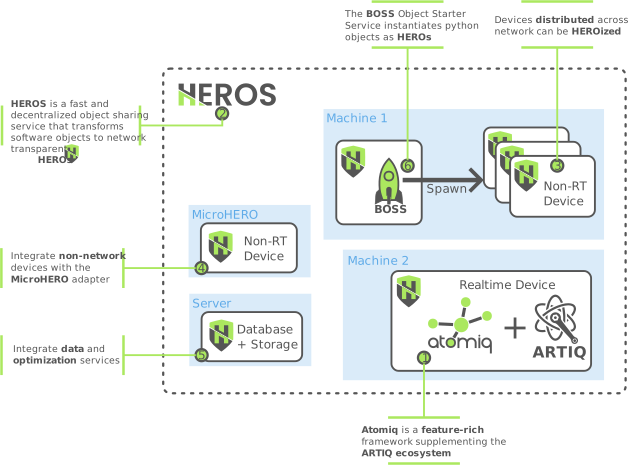
We distinguish between two main areas: Atomiq, which handles the control of realtime devices (for now we support ARTIQ) and HEROS which handles the control of non-realtime devices, data flow and connectivity.
You can learn more about the individual components by visiting their individual documentation or follow our getting started guide!
HEROS is the core backend of the framework. It makes objects network transparent (we then call a HERO [1]), handles event and manages data flow and connections. If you just want to use existing drivers you typically don’t need to interact with it directly.
Tip
You can use our HERO Monitor to see all your HEROs and interact with them.
BOSS is an orchestrator service which is used to make a HERO (network transparent objects) out of any ordinary Python object.
Tip
This is a good starting point if you want to start with connecting your non real-time hardware (monitoring, lasers, …).
Tip
The HEROS devices repository () provides drivers for a multitude of devices (see Hardware for all supported devices)
Atomiq is a transparent layer on top of ARTIQ with several paradigms to reduce boilerplate code, get rid of nix and make working with physically relevant quantities easier.
It is tightly integrated with HEROS, but can also be used stand alone.
Tip
This is a good starting point if you want to start with connecting your real-time hardware (ARTIQ).